History

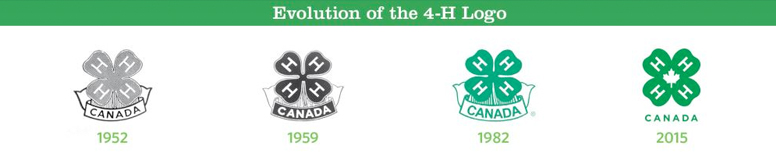
Evolution of the 4-H Logo
4-H in Canada all started right here in Manitoba! Roland, Manitoba, is recognized as the birthplace of 4-H in Canada, as it was the site of the first organizational meeting for a Boys and Girls Club in 1913.
 
Since then, 4-H in Manitoba has evolved significantly over its more than 100-year history. The first clubs—Roland, followed later that year by Darlingford, Manitou, Neepawa, Oak Lake, Starbuck, Stonewall, and Warren—were established by the Extension Service of the Manitoba Agricultural College through the school system. Over the years, responsibility for 4-H shifted between various provincial departments before settling with the Department of Agriculture in 1926. In 2016, the Manitoba Government stepped back from directly overseeing the program, and Manitoba 4-H Council was incorporated as its own non-profit organization.
 
The “4-H” name wasn’t officially adopted until 1951. That same year, the Manitoba 4-H Club Council was created to promote, encourage, and improve the program, marking a significant step toward self-governance.
 
The original clubs were multi-purpose, with the first 472 members raising poultry and growing potatoes and fodder corn. Between 1928 and 1930, specialized single-project clubs emerged, focusing on topics such as grain, beef, sheep, dairy, poultry, gardening, clothing, and cooking. By 1963, as 4-H celebrated its 50th anniversary in Manitoba, the trend had shifted back toward multi-purpose clubs, except for certain agricultural projects.
 
Membership has fluctuated over the years. Initially open to youth aged 10-16, 4-H now welcomes members aged 6-25. Enrollment peaked at 9,495 members in 1939-40 but dropped to 4,323 during the war years due to enlistment and labor shortages. In more recent history, Manitoba 4-H had over 2,000 members before 2020. The pandemic caused a temporary decline, but with the introduction of virtual projects and a gradual return to in-person programming, membership has been rebuilding since 2022, with over 1,500 members currently engaged.
 
Despite these changes, the core values of 4-H remain the same. Skill development, leadership, and citizenship training have been at the heart of the program since its inception. Public speaking has been a key component since 1926, and the Provincial Communications Competition, introduced in 1947, remains a cornerstone of 4-H today. Member and leader involvement in club management dates back to 1916 and continues to be a vital part of the program. Additionally, members still recite the 4-H Pledge, which has been in use since 1927 when it was officially adopted at the first United States National 4-H Camp in Washington, D.C.
 
4-H in Manitoba has a rich legacy of empowering youth, fostering community engagement, and shaping future leaders. While the program has grown and adapted over time, its commitment to “Learn To Do By Doing” remains as strong as ever.

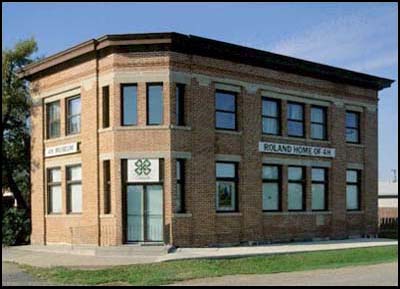
Roland 4-H Museum

The 4-H Museum located in Roland, Manitoba is the Official 4-H Museum in Canada. It opened in August of 1990 and now has over 220 artifacts from across Canada and the U.S. The artifacts and memorabilia consist of anything related to 4-H such as trophies, uniforms, banners, records, scrapbooks and articles made in projects. In honour of the 100th Anniversary celebrations, the museum also received special items from each of the provincial 4-H organizations which are housed in a custom-built display cabinet.

The oldest artifact is a medal for a flower competition in 1911 donated by Walter McDonald (an original member of the Boys and Girls Club formed in Roland). In 1911, work was already beginning on organizing the Boys and Girls Club. Another medal donated by Walter McDonald is from 1913 for a gardening competition in the Junior Section.

The 4-H Museum welcomes any artifacts or memorabilia that clubs, provinces or states would like to donate. Historical paper documents can also be sent to the Provincial 4-H Office for placement in the private archive section of the Province of Manitoba.

The 4-H Museum welcomes visitors from all over the world, including bus tours and 4-H exchange groups. The museum is open in July and August, Monday to Friday from 1 p.m. – 4 p.m. It’s also open by appointment through the rest of the year. For more information, call 204-343-2061 or see the museum website.

4-H Calendar

Events in September 2026

Sunday Monday Tuesday Wednesday Thursday Friday Saturday
August 30, 2026
August 31, 2026
September 1, 2026
September 2, 2026
September 3, 2026
September 4, 2026
September 5, 2026
September 6, 2026

6:00 pm: Southwest Area Council - Brandon Zone Reorganization


September 8, 2026

Meeting will be held at the Manitoba 4-H Council office, 658 Unit A 10th St. in Brandon.

September 9, 2026
September 10, 2026
September 11, 2026
September 12, 2026
September 13, 2026

6:30 pm: South Parkland Area Council Reorganization


September 14, 2026

Meeting will be held in Kenton.

6:30 pm: North Parkland Area Council Reorganization


September 15, 2026

Meeting will be held at the Dauphin Rec Complex.

7:00 pm: Red River Area Council Reorganization


September 15, 2026

Meeting will be held at Golden Plain Art Council in Carman.

6:30 pm: Eastman Area Council Reorganization


September 16, 2026

Meeting will be at Chicken Chef in Lorette.

6:30 pm: Southwest Area Council - Virden/Melita Zones Reorganization


September 17, 2026

Meeting will be held at the Pipestone Hall.

September 18, 2026
September 19, 2026
September 20, 2026

7:30 pm: North Interlake Area Council Reorganization


September 21, 2026

Meeting will be at Eriksdale School.

6:30 pm: Southwest Area Council - Boissevain Zone Reorganization


September 22, 2026

Meeting will be held at the Boissevain RM building.

6:00 pm: South Interlake Area Council Reorganization


September 23, 2026

Meeting will be held at Fry-Day's in Teulon.

September 24, 2026
September 25, 2026
September 26, 2026
September 27, 2026

7:00 pm: Central Plains Area Council Reorganization


September 28, 2026

Meeting will be held at MacGregor Rec (Golf Course).

September 29, 2026

N/A: National Day for Truth and Reconciliation

N/A
September 30, 2026

October 1, 2026
October 2, 2026
October 3, 2026

Upcoming Events

Translate »